


Train to Become a Vital Member of Any Healthcare Team
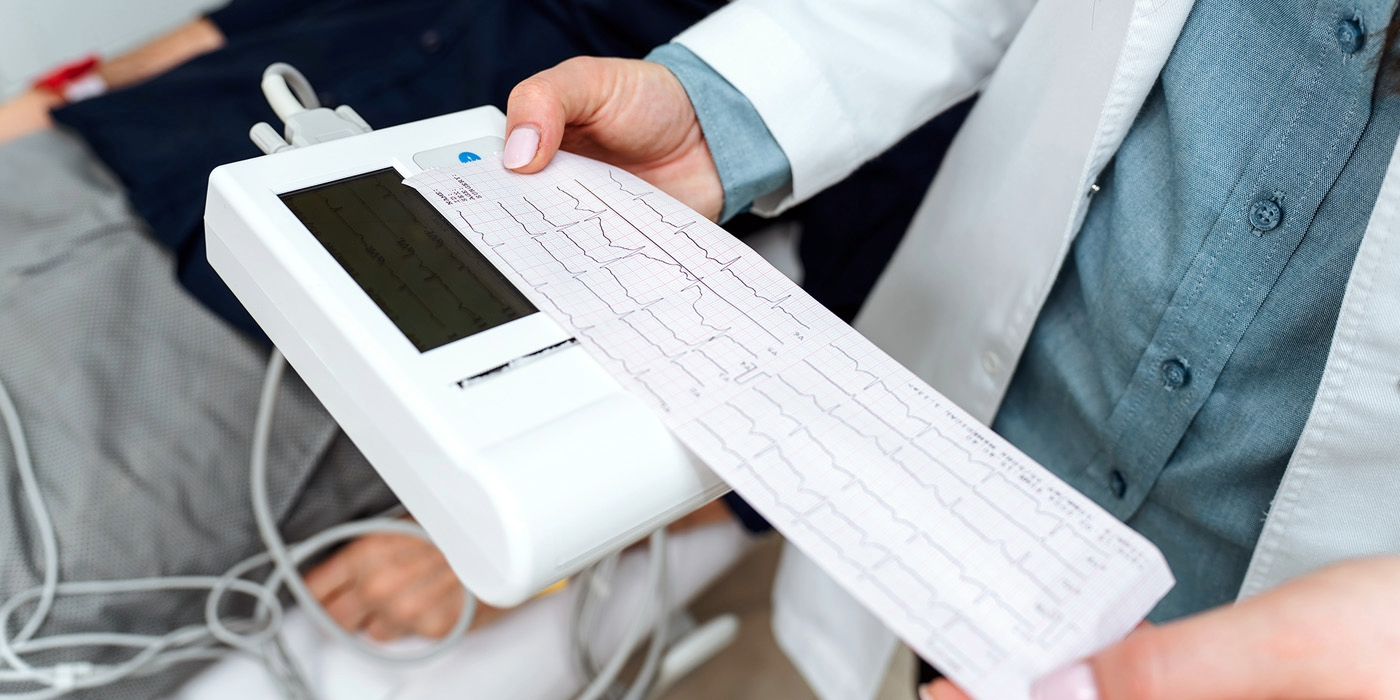
This 100% online EKG technician training program prepares you for an important role in healthcare. EKG technicians support physicians and care teams by performing electrocardiograms used to diagnose and monitor cardiac conditions.
The course provides instruction in cardiac anatomy, patient care, medical terminology, electrocardiography procedures, infection control, and standard precautions.
You will learn how to operate and maintain EKG equipment, monitor patient conditions, recognize different EKG rhythms, apply and monitor testing equipment, and communicate effectively in clinical settings.
Upon successful completion, you will be prepared to sit for the National Healthcareer Association Certified EKG Technician (CET) exam. Enrollment includes a prepaid exam voucher.
Eligible students may also apply to participate in a clinical experience. Clinical placement is not guaranteed.

Certification Preparation
This course prepares students for the Certified EKG Technician (CET) certification offered by the National Healthcareer Association.
To qualify for the NHA CET certification, students must meet the education requirements, successfully complete the course, and provide proof of 10 successfully performed EKGs on live individuals.
Job Outlook for EKG Technicians
EKG technicians work in hospitals, outpatient clinics, diagnostic testing centers, long-term care facilities, laboratories, and physicians' offices.
The source material reports an average annual salary of $54,700 for EKG technicians in the United States, with earnings varying based on experience, certification, location, and work setting.
Entry-level technicians may earn between $35,000 and $45,000, while experienced professionals and those in specialized roles may earn $65,000 to $80,000 or more.
Certified EKG Technician FAQs
What is an EKG technician?
EKG technicians operate equipment used to measure and record the electrical activity of the heart. Their work helps physicians and other medical professionals diagnose and monitor cardiovascular conditions.
What does an EKG technician do?
EKG technicians may perform a variety of patient-care and diagnostic duties, including:
- Positioning patients correctly for monitoring.
- Explaining testing procedures to patients.
- Running EKGs and attaching leads to the chest, arms, and legs.
- Performing stress tests.
- Preparing patients for Holter monitoring.
- Obtaining baseline records of heart function.
- Delivering test results to physicians and other medical professionals.
- Maintaining EKG equipment.
- Scheduling appointments and maintaining patient records.
- Assisting physicians during procedures.
What certification does this course prepare me for?
This course prepares students for the National Healthcareer Association Certified EKG Technician (CET) certification exam.
Course Objectives
- Learn core concepts of cardiac anatomy and physiology.
- Understand proper EKG machine protocols and maintenance.
- Learn to recognize and interpret various EKG rhythms.
- Develop effective communication skills for clinical environments.
- Understand patient preparation and electrocardiography procedures.
- Prepare for the NHA Certified EKG Technician certification exam.
Prerequisites and Certification Requirements
To enroll, students should have a high school diploma, GED or equivalent, or previous healthcare experience.
NHA CET Certification Requirements
To qualify for the NHA Certified EKG Technician certification, students must:
- Have a high school diploma or equivalent.
- Successfully complete the course.
- Provide proof of 10 successfully performed EKGs on live individuals.
The course meets all state requirements. NHA certification exams are available online only to candidates located in the United States.
Clinical Experience
Eligible students may apply for a clinical experience after successfully completing the online course and meeting applicable account requirements.
Clinical placement is not guaranteed. Students are responsible for completing any required clinical requirements, although affiliated partnerships may improve the likelihood of finding an appropriate site.
Funding Notice
Students receiving Workforce Innovation and Opportunity Act funding should consult their funding representative before using the Medical Terminology test-out option, since funding programs may have specific requirements or restrictions.
Instructors
Rox Ann Sparks
Rox Ann Sparks, DNP, MSN, RN, CNE, CMHIMP, LNC, has 35 years of experience in emergency medicine and has worked with patients and students across many healthcare settings.
Her career progressed from CNA and LVN credentials through RN and MSN training to a Doctor of Nursing Practice. She has also developed healthcare education programs and works in nursing consulting.
Alexis M. Ramirez
Alexis M. Ramirez, DNP, MSN, NPD-BC, CCRN, has experience in cardiovascular critical care, acute-care education, and academic nursing.
She has trained Patient Care Assistants, Monitor Technicians, Licensed Vocational Nurses, and Registered Nurses and is board certified in Nursing Professional Development and Critical Care Nursing.
Gail Hubbard
Gail Hubbard, MSN, RN, RMA, has worked in healthcare for more than 30 years. Her experience includes medical records, medical assisting, EKG technology, billing and coding, nursing, infection control, and staff development.
She also has more than ten years of experience teaching medical assisting, nursing, nurse assisting, EKG, and phlebotomy.
Sandra Isaak
Sandra Isaak, MSN, BSN, RN, FNP-C, is a certified Family Nurse Practitioner with more than 14 years of emergency-room experience.
She has also spent more than 16 years teaching theory courses and clinical rotations for nursing and allied-health students.
Registration and Enrollment
This course is 100% online. Start anytime.